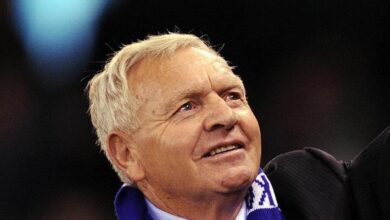
Footy Lost One of Its Absolute Best Today
There are days when footy doesn’t matter. Today is one of them.
Neale Daniher has passed away at the age of 65, his family confirming he died at home — peacefully, surrounded by the people who loved him. Thirteen years after being diagnosed with motor neurone disease, one of the great men of Australian rules football is gone, and the whole competition should take a moment to stop and breathe and just be grateful he was part of it.
A Footballer First
Now look, you know me — I bleed black and white. Always have, always will. Carn the Pies. But even the most parochial Collingwood tragic on the planet has to set the scarf aside sometimes and just talk about footy and people, and Neale Daniher was both of those things at the absolute highest level.
He played for Essendon in the 1980s — yeah, I know, I know — but he was a genuine quality midfielder at a time when teh game was hard and physical and unforgiving. Injuries cut his playing career shorter than it should of been, and that’s a genuine tragedy in its own right. But what came after? That’s the stuff that makes legends.
Neale Daniher the footballer was good. Neale Daniher the human being was something else entirely.
What He Built at Melbourne
He took over as senior coach of the Melbourne Football Club in 1998 and for nearly a decade he gave everything he had to a club that, let’s be honest, has tested the patience of even its most devoted supporters over the years. He coached 204 games, took them to finals, and built a culture at a club that desperately needed one.
Was Melbourne a powerhouse under Daniher? No. Did he have the list depth or the list management that some coaches enjoyed? Not always. But anyone who watched footy seriously in that era knows what he was building. The players who came through under him talk about the man with reverence. That tells you everything.
He stepped down in 2007, and it was only later — six years later — that the world found out he was already dealing with something unimaginable while he was still doing the job. Motor neurone disease. Diagnosed in 2013, but the signs had been there earlier. The man coached AFL football while his own body was beginning to betray him. Wrap your head around that.
The Fight That Defined Him
Here’s the thing about Neale Daniher that separates him from almost everyone else in the history of this game. When he got the worst news a person can get, he didn’t retreat. He didn’t disappear. He stood up.
He became the face of FightMND, the foundation he helped establish that has raised extraordinary amounts of money for research into motor neurone disease. Every Big Freeze at the MCG — that incredible moment where footy identities slide into an ice bath in front of packed crowds — that’s Neale Daniher’s legacy in action. That’s him turning personal devastation into something that might save lives down the track.
Hundreds of millions of dollars raised. Real research funded. Real hope created for families who thought there was none. All because a footy coach refused to go quietly.
He turned the worst hand imaginable into something that will outlast all of us. That’s not courage in the abstract. That’s courage in its rawest, most real form.
\h2>What Footy Does When It’s At Its Best
I’ve always reckoned that Australian rules football, at its core, is a community game. Yeah, we argue about the rules, we argue about the umpires — and don’t get me started on some of the calls that have gone against the Pies over the years — but underneath all of that, footy is about belonging somewhere. About being part of something bigger than yourself.
Neale Daniher understood that better than most. The way the footy community rallied around FightMND is one of the genuinely beautiful stories in the modern history of the game. Players, coaches, officials, fans — people who would ordinarily spend every Saturday trying to beat each other — all coming together for something that mattered more than any result on any scoreboard.
That’s what Neale Daniher built. And he built it while the disease was taking things from him, bit by bit, year by year. Every appearance he made, every speech he gave, every Big Freeze he oversaw — it cost him. And he paid that cost willingly, every single time.
A Man Who Earned Every Tribute
The tributes will flow today and over the coming days, and they’ll be genuine because Neale Daniher genuinely earned every single one of them. You’ll hear from Melbourne players past and present. You’ll hear from coaches who learned from him. You’ll hear from researchers whose work has been funded by the foundation he championed.
And you’ll hear from ordinary footy fans — Dees supporters, sure, but supporters of every club — who watched this man carry himself with such extraordinary grace through something so brutal that most of us can barely comprehend it. Who watched him laugh, and fight, and refuse to feel sorry for himself in public, and somehow make everyone else around him feel like the hard things in their own lives were manageable.
That’s a rare gift. That’s a rare person.
The Daniher Name Goes On
The Daniher family name is woven into the fabric of AFL football in ways that will last for generations. Neale’s brothers — Anthony, Terry and Chris — all played at the top level. His sons have played the game. The family’s connection to Australian football runs as deep as any in the history of the code.
But it’s Neale who will be remembered as the one who gave the most. Not just to football, but to the broader fight against a disease that takes so much from so many. His legacy isn’t just in the games won or the players developed. It’s in every dollar raised, every research breakthrough funded, every family that gets a little more time because of the work that began with one coach deciding that his diagnosis was going to mean something.
Rest Easy, Neale
I’m a Collingwood man through and through. I always will be. But today I’m just a footy fan, and today footy lost someone irreplaceable.
To the Daniher family — thank you. Thank you for sharing him with all of us. Thank you for the strength you showed standing beside him through everything. And thank you to Neale himself, for showing an entire nation how to face the hardest thing imaginable without ever losing your humanity, your humour, or your love for the game.
Sixty-five years old. He should have had so many more. But what he did with the years he had? That’ll echo for a very long time.
Rest easy, Neale Daniher. The game won’t forget you. We won’t forget you.