AFLW — The Womens AFL Competition
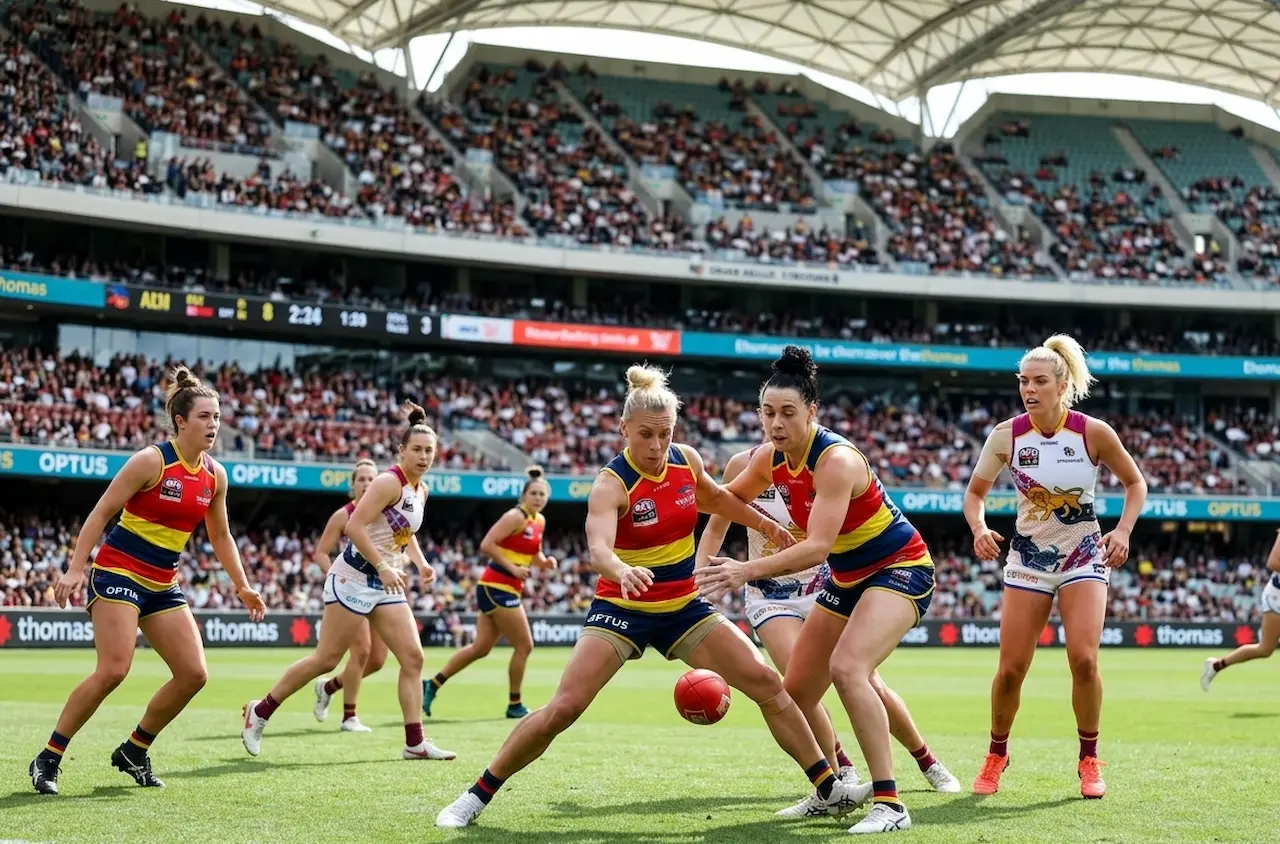
The AFLW Womens AFL Competition is the AFL’s most important expansion story of the modern era. Launched in 2017 with eight inaugural clubs, the women’s professional Australian Rules competition has grown to 18 teams, attracted prime-time TV coverage, and produced a generation of stars whose names Erin Phillips, Daisy Pearce, Tayla Harris, Madison Prespakis, Monique Conti, and Sabrina Frederick, are now embedded in Australian sporting culture. This is your guide to AFLW: the history, the awards, the premierships, the rumours, and where it’s all heading next.
The History: 2017 and the Women’s Footy Push
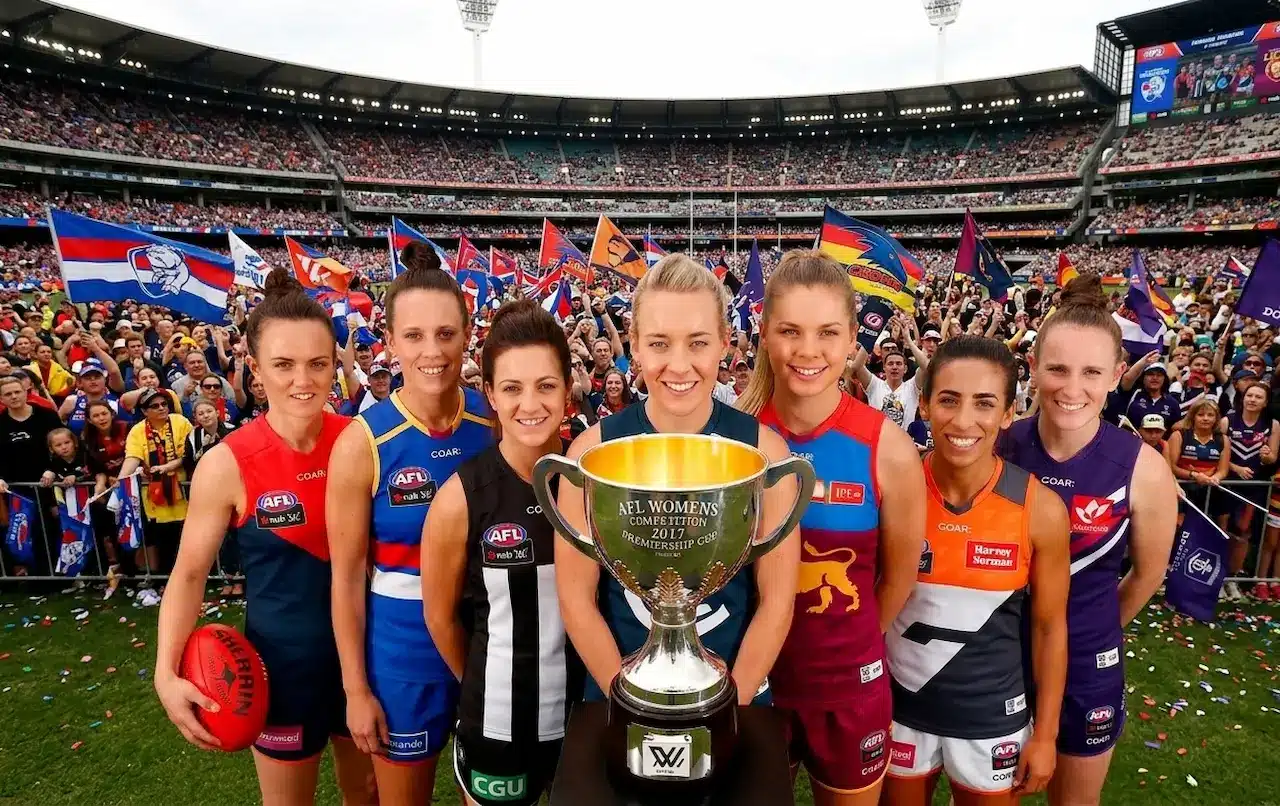
Women had played Australian Rules football for over a century before the AFLW launched, but never as a professional national competition. The push for a formal AFLW competition came together in 2016, with the AFL announcing eight inaugural teams: Adelaide Crows, Brisbane Lions, Carlton, Collingwood, Fremantle, GWS, Melbourne, and Western Bulldogs. The first AFLW season kicked off in February 2017 — a short, sharp pre-AFL-season window that immediately drew strong crowds and broadcast ratings.
The competition has expanded multiple times:
- 2017: 8 inaugural teams.
- 2019: 10 teams (Geelong, North Melbourne added).
- 2020: 14 teams.
- 2022: 18 teams (full national alignment with the AFL men’s clubs).
- 2023: AFLW season moved to a Spring schedule (separate from AFL season) — Season 7.
The Premierships
The AFLW Grand Final has been held annually since 2017:
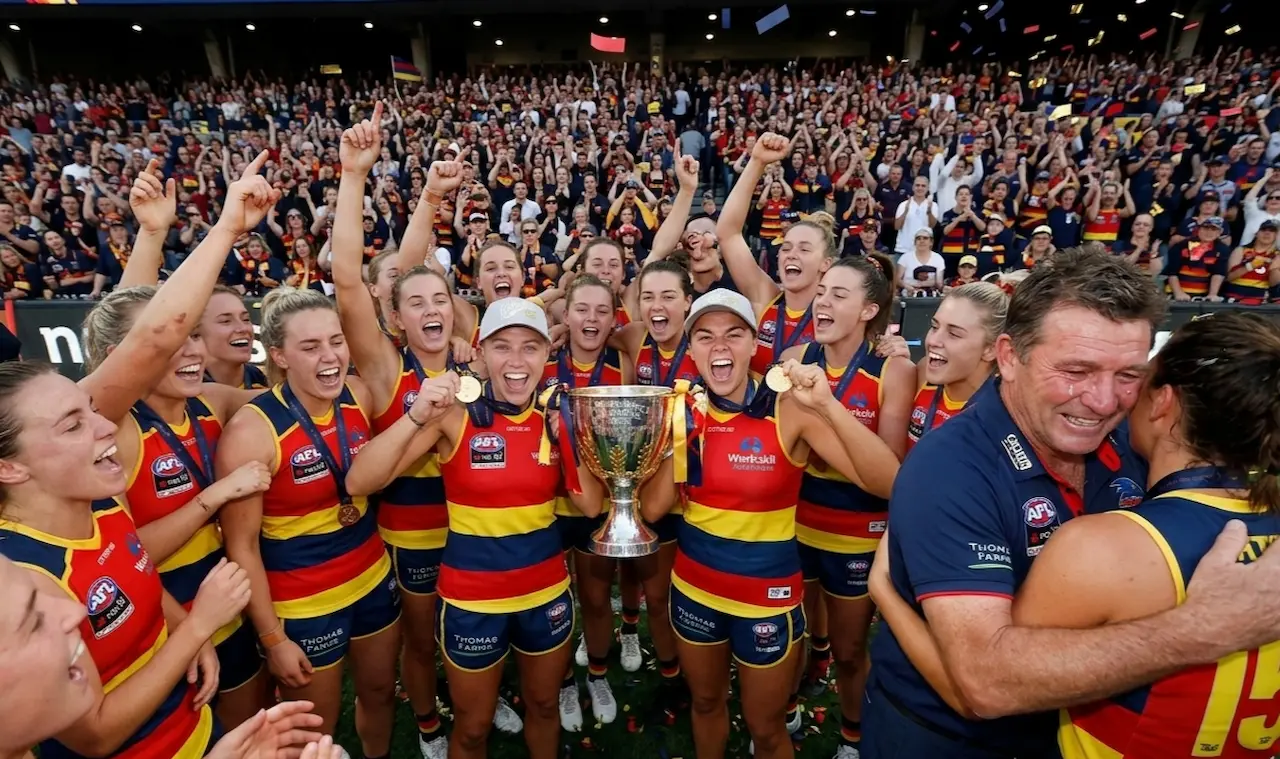
- 2017: Adelaide Crows defeated Brisbane Lions.
- 2018: Western Bulldogs defeated Brisbane Lions.
- 2019: Adelaide Crows defeated Carlton.
- 2020: Adelaide Crows awarded title — Grand Final cancelled due to COVID.
- 2021: Brisbane Lions defeated Adelaide Crows.
- 2022: Adelaide Crows defeated Melbourne Demons.
- 2023: Brisbane Lions defeated Melbourne Demons.
- 2024: Brisbane Lions defeated North Melbourne.
Adelaide and Brisbane have dominated the early AFLW era, the Crows with multiple flags built around Erin Phillips, the Lions with their recent run under coach Craig Starcevich.
The Stars
The AFLW has produced generational stars across its short history:
- Erin Phillips (Adelaide) — three-time Best & Fairest (2017, 2018, 2019), dual premiership player, former WNBA basketballer, the foundational AFLW superstar.
- Daisy Pearce (Melbourne) — captain, multi-time All-Australian, broadcaster, the public face of AFLW expansion.
- Tayla Harris (Carlton/Melbourne) — leading goalkicker, the subject of the famous “kick” photo controversy of 2019.
- Sabrina Frederick (Brisbane) — leading goalkicker, key forward of the Lions’ early era.
- Madison Prespakis (Carlton) — multiple Best & Fairest, midfield engine.
- Monique Conti (Western Bulldogs) — multi-time All-Australian, midfield brilliance.
- Bri Davey, Karen Paxman, Kiara Bowers, Aliesha Newman — the broader pool of AFLW stars who’ve shaped the competition.
The Awards
The AFLW has its own constellation of awards, mirroring (and adapted from) the AFL’s:
- AFLW Best & Fairest — the women’s premier individual award (the AFLW’s Brownlow equivalent).
- AFLW Rising Star — best young player.
- AFLW Grand Final Best on Ground — the women’s Norm Smith equivalent.
- AFLW Coaches’ Award — the women’s MVP voted by senior coaches.
- AFLW Leading Goalkicker — the women’s Coleman Medal equivalent.
Erin Phillips’s three consecutive Best & Fairest medals (2017, 2018, 2019) are the standout individual achievement of the early era. Tayla Harris and Sabrina Frederick have led the goalkicking lists. Multi-time All-Australians Madison Prespakis, Monique Conti and Erin Phillips have been the midfield faces of the competition.
The Big Moments
- Round 1, 2017 — Carlton vs Collingwood at Princes Park, the first AFLW match. Lockout crowd; the gates were closed before kickoff because so many fans turned up.
- 2017 Grand Final — Adelaide vs Brisbane. Erin Phillips’s BOG. The inaugural premiership.
- The Tayla Harris kick photo (2019) — one of the most-discussed sports photos of modern Australian media- sparked debate about online harassment, women’s sport visibility, and the AFL’s social-media policy.
- Erin Phillips’s 2018 ACL injury in the AFLW Grand Final — Phillips powered through to win Best on Ground despite the injury.
- Brisbane’s 2024 Grand Final win — Lions completed a multi-flag era under coach Craig Starcevich.
- The 2023 schedule change — moving AFLW from autumn to spring season.
The Rumours and the Future
The persistent rumour: full pay parity between AFLW and AFL men’s competitions. The AFLW collective bargaining agreement has progressively closed the gap; full parity remains a future aspiration, but not currently in place.
The other rumour: longer AFLW season. The current 10-game home-and-away schedule is shorter than the men’s 23-game season; players and supporters have lobbied for expansion. The AFL has signalled gradual increases.
The wildcard: AFLW expansion beyond 18 teams. Has been canvassed in long-term planning; it depends on broader AFL national expansion (Tasmania Devils’ AFLW entry expected with the 2028 men’s debut).
The Verdict
The AFLW is one of the AFL’s most successful modern initiatives. From the inaugural 2017 lockout at Princes Park to the modern 18-team national league, the women’s competition has grown extraordinarily fast. Erin Phillips’s foundational era, Brisbane’s recent dominance, Tayla Harris’s cultural impact — every era of AFLW has produced its stars and its stories.
Click into any of the AFLW awards and stories below for the full history. From the 2017 Adelaide breakthrough to the modern Brisbane era, the women’s footy revolution is in full swing.