What Awards Are Given In The AFL
Australian Rules Football has more medals on offer than the average regional show. There’s silverware for the best player, the second-best player, the best player in a Grand Final, the player who kicked the most goals, the most-improved player, the best young player, the best captain, the best mark, the best goal, the best century‘s worth of goals, the best coach, and yes, the worst team. If you’ve kicked a Sherrin in anger, you’re probably eligible for at least one of them.
This is your guide to the lot. We’ll walk you through every major piece of metalware the AFL hands out, who’s won them, what they’re worth, and which ones you can pawn for a holiday house in Torquay ( joking, most are unsellable, sentimental, or both ).
The Crown Jewel: The Brownlow Medal
If footy has a Ballon d’Or, this is it. The Charles Brownlow Medal goes to the “fairest and best” player in the home-and-away season as voted by the umpires (3-2-1 votes per game). Started in 1924 in honour of Geelong administrator Charles Brownlow, the count happens on the Monday night of Grand Final week and stops the country dead. Patrick Dangerfield, Dustin Martin, Nat Fyfe, Lachie Neale, Ollie Wines, and Marcus Bontempelli, every modern superstar has either won one or been controversially robbed of one.
The big quirk: it’s an umpire-voted award, which means inside mids who collect cheap touches near the umpire’s whistle do unreasonably well. Key forwards rarely win it. Wayne Carey didn’t win one. Jonathan Brown didn’t either. The Brownlow is footy’s most prestigious medal and most reliable bar argument.
The Big Day Trophy: The Norm Smith Medal
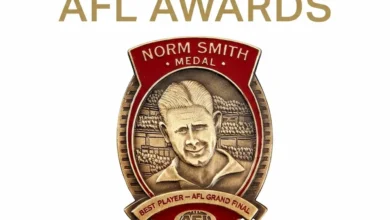
The Norm Smith Medal goes to the best player on the ground in the AFL Grand Final. First awarded in 1979 to Wayne Harmes (Carlton’s “I knocked it back!” hero). Named after Melbourne’s six-time premiership coach, Norm Smith. Dustin Martin won three of these (2017, 2019, 2020), the only player to do so, which is why Tigers fans walk a little taller everywhere they go.
The Goalkicking Trophies: Coleman Medal & Co.
The Coleman Medal goes to the leading goalkicker in the home-and-away season. Named after Essendon legend John Coleman (537 goals in 98 games, calculate that ratio). It started life as the Leading Goalkicker Trophy in 1955 and was renamed in 1981. The winners’ list reads like a hit list: Tony Lockett, Jason Dunstall, Tony Modra, Lance Franklin, Jeremy Cameron, and Charlie Curnow.
The VFL/AFL leading goalkicker pre-1955 still exists in the records, but didn’t carry a formal medal. It’s how Bob Pratt’s 150-goal 1934 season still gets quoted at every footy trivia night.
The Players’ Players: Leigh Matthews / MVP
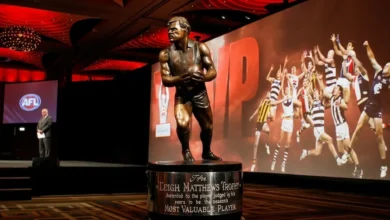
The Leigh Matthews Trophy (also known as the AFLPA’s Most Valuable Player) is voted on by the players themselves. Started in 1982 as the AFLPA MVP, renamed for Lethal in 2002. It’s the award that often goes to the player the umpires were too distracted to notice a true peer’s gong. Buddy Franklin, Patrick Dangerfield and Marcus Bontempelli are recent multiple winners.
The Selectors’ Team: All-Australian
The All-Australian team is the AFL’s annual best-22, picked by a panel of selectors. Origins go back to interstate carnivals in the 1950s, but the modern annual selection started in 1991. Making the All-Australian team is the surest sign you’ve had a top-shelf year. Captaining it (the All-Australian captaincy, an unofficial honour) is reserved for the best player of the season.
The Future: Rising Star
The NAB AFL Rising Star goes to the league’s best player aged under 21 with fewer than 10 senior games at the season start. Started in 1993 (Michael O’Loughlin won the first), it’s the conveyor belt of stars: Adam Goodes, Daniel Rich, Daniel Talia, Jaeger O’Meara, Marcus Bontempelli, Sam Walsh, Nick Daicos. Win this, and you’re tipped for a long career, though the curse is real for some (ask Tory Dickson).
The Coach: Jock McHale Medal
The Jock McHale Medal goes to the premiership coach. Named after Collingwood’s nine-time flag-winning coach. First awarded in 2001 retrospectively. Winners since: Mick Malthouse, Paul Roos, Alastair Clarkson (×4 with Hawthorn), Damien Hardwick (×3 with Richmond), Chris Scott, Simon Goodwin, John Longmire and Chris Fagan.
The Other Big Ones
- Gary Ayres Award — VFL best on ground in finals, named after the four-time premiership Hawk.
- Mark of the Year — annual hangtime competition. Speccies only, knees on heads encouraged.
- Goal of the Year — banana, snap, around-the-body torpedoes from the boundary. Eddie Betts owns about half the modern reel.
- Goal of the Century — voted in 2001, won by Alex Jesaulenko’s 1970 Grand Final mark and goal (yep, both).
- McClelland Trophy — minor premiership trophy for the team finishing top of the home-and-away ladder. Named after AFL Commission chairman Sir Maurice Nathan, then renamed for Jack McClelland. The “minor flag” — nice to have, but the prize is a week off and a home qualifying final.
- Wooden Spoon — last on the ladder. Not officially handed out but thoroughly earned. North Melbourne’s recent residency notwithstanding.
- Bob Skilton Medal — Sydney Swans’ best and fairest. Every club has a B&F; we cover the ones with proper history.
- Therabody AFL Best Captain — the league’s leadership gong, voted by the captains themselves.
- Glendinning–Allan Medal — Western Derby best on ground (West Coast vs Fremantle).
- Showdown Medal — Adelaide vs Port Adelaide, best on ground.
- Anzac Day Medal — best on ground in the Essendon vs Collingwood blockbuster.
- Ron Evans Medal — leading goalkicker in the AFL pre-season / Community Series.
- Madden Medal — Geelong vs Carlton best on ground (named after the Madden brothers).
AFLW Awards
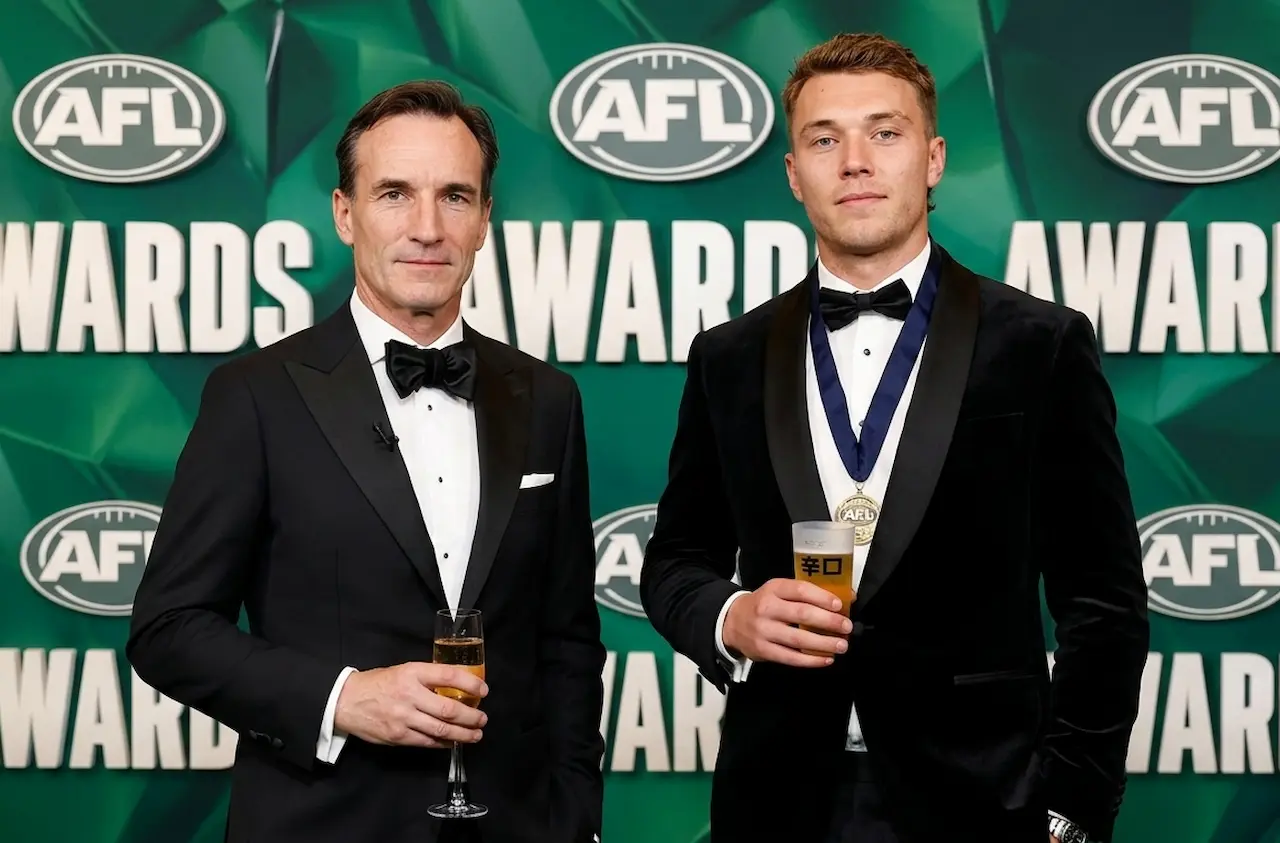
The women’s competition has its own constellation:
- AFLW Best & Fairest — the league’s premier individual gong (initially the Best and Fairest, with various sponsor names).
- AFLW Rising Star — best young player.
- AFLW Best on Ground (Grand Final) — equivalent of Norm Smith.
- AFLW Coaches Award — voted by senior coaches.
- AFLW Goalkicking Award — leading goalkicker.
Erin Phillips, Daisy Pearce, Madison Prespakis and Monique Conti have been the modern faces of these. Phillips won so many in the early years that they joked about renaming the trophy after her.
The Politics, The Robberies and The Rumours
Every year, there’s a Brownlow controversy. Wayne Carey’s chronic snubbing. Patrick Dangerfield’s coin-toss-tight win in 2016. Sam Mitchell was retroactively awarded the 2012 Brownlow after Jobe Watson lost his to ASADA. The All-Australian team sparks a media firestorm every September. Coleman Medal contests come down to the last quarter of the last home-and-away game.
And the rumours? Plenty. Suggestions of a Best on Ground vote at every game (rejected so far). Talk of player-only Brownlow votes (won’t happen, umpires guard their privilege). Whispers of an AFLW Brownlow that’s truly umpire-voted rather than coach-voted (still in flux).
Click into any of the awards below for the full history, every winner since day one, the closest counts, the snubs and the upsets. The AFL’s silverware cabinet is bigger than you think, and we’ve got the dust rag out for all of it.
Every AFL & AFLW award explained
- AFL Goal Of The Century — Alex Jesaulenko’s 1970 Magic
- AFL Goal Of The Year — Banana Goals And Boundary Snaps
- AFL Mark Of The Year — The Annual Hangtime Crown
- The AFL Best Captain Award — Voted By The Captains Themselves
- The AFL Wooden Spoon — Last On The Ladder
- The AFLW Best & Fairest — The Women’s MVP
- The AFLW Coaches’ Award
- The AFLW Grand Final Best On Ground Medal
- The AFLW Leading Goalkicker Award
- The AFLW Rising Star — Women’s Best Young Player
- The All-Australian Team — The AFL’s Best 22 Of The Year
- The Anzac Day Medal — Essendon vs Collingwood Best On Ground
- The Bob Skilton Medal — Sydney Swans’ Best And Fairest
- The Brownlow Medal — The AFL’s Crown Jewel
- The Coleman Medal — The AFL’s Leading Goalkicker
- The Gary Ayres Award — Best On Ground In The VFL Grand Final
- The Glendinning–Allan Medal — Western Derby Best On Ground
- The Jock McHale Medal — The AFL Premiership Coach Award
- The Leigh Matthews Trophy — The AFL Players’ MVP
- The Madden Medal — Geelong vs Carlton Best On Ground
- The McClelland Trophy — The AFL’s Minor Premiership
- The NAB AFL Rising Star — The League’s Best Young Player
- The Norm Smith Medal — Best On Ground In The AFL Grand Final
- The Ron Evans Medal — Pre-Season Leading Goalkicker
- The Showdown Medal — Adelaide vs Port Adelaide Best On Ground