What Stadiums Do The AFL Play On
Ask any footy tragic where the AFL plays, and you’ll get a ten-minute answer involving at least one bulldozed suburban ground, two pubs, and a story about how the wind used to come down the race at Princes Park. The truth is, the AFL doesn’t play in stadiums; it haunts them. From the cathedral on Brunton Avenue to a paddock in Cairns where you can practically smell the mango trees, the league has called more grounds home than most clubs have had coaches.
This is your one-stop shop for the lot of them. We’ll run through the venues the AFL plays on right now, the suburban dust-bowls it abandoned for the corporate boxes, and the rumours about where the league reckons it’s going next. Strap in. The MCG is just the start.
The Cathedral, the Coliseum and the Concrete Bowl: AFL’s Big Three
Let’s not muck around. Three venues do the heavy lifting in the modern AFL.
The Melbourne Cricket Ground (MCG) is the spiritual home of the game. 100,024 seats. The Grand Final’s locked in here until at least 2057 thanks to a deal with the MCC that NSW politicians still can’t get their head around. If footy has a Vatican, this is it, and Bruce McAvaney is the Pope.
Marvel Stadium (née Colonial, née Telstra Dome, née Etihad, we’ve lost count too) is the MCG’s slightly awkward little brother in Docklands. Closed roof, fast track, and a crowd that sounds twice as loud when 35,000 turn up because of the lid. North Melbourne, Western Bulldogs, St Kilda and Essendon basically live here. Carlton drops in too when the MCG’s busy.
Adelaide Oval is the redemption story of Australian sport. Once a sleepy cricket ground, now the loudest 53,000-seat ear-bashing in the country when the Crows or Power are on song. The redevelopment finished in 2014 and instantly relegated AAMI Stadium (RIP) to a training base.
The Other Twelve: Where The Rest Of The Footy Lives
Outside the big three, the AFL’s home grounds are scattered across five states and one territory. Here’s the current roll call:
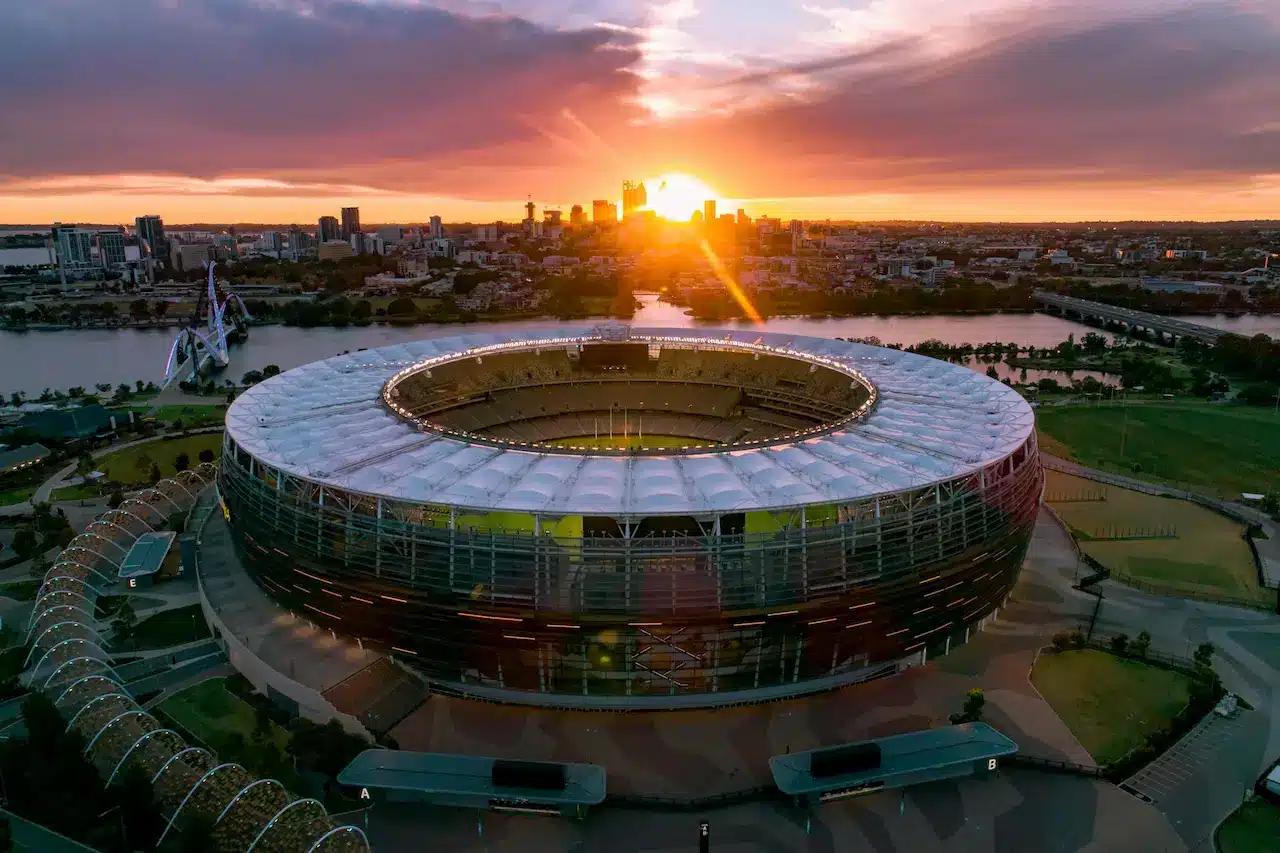
- Optus Stadium (Perth) — 60,000 seats of West Australian smugness. Opened in 2018. West Coast and Fremantle’s home, and a venue that gets the Grand Final whenever Victoria’s locked down (ask a Demons fan about 2021).
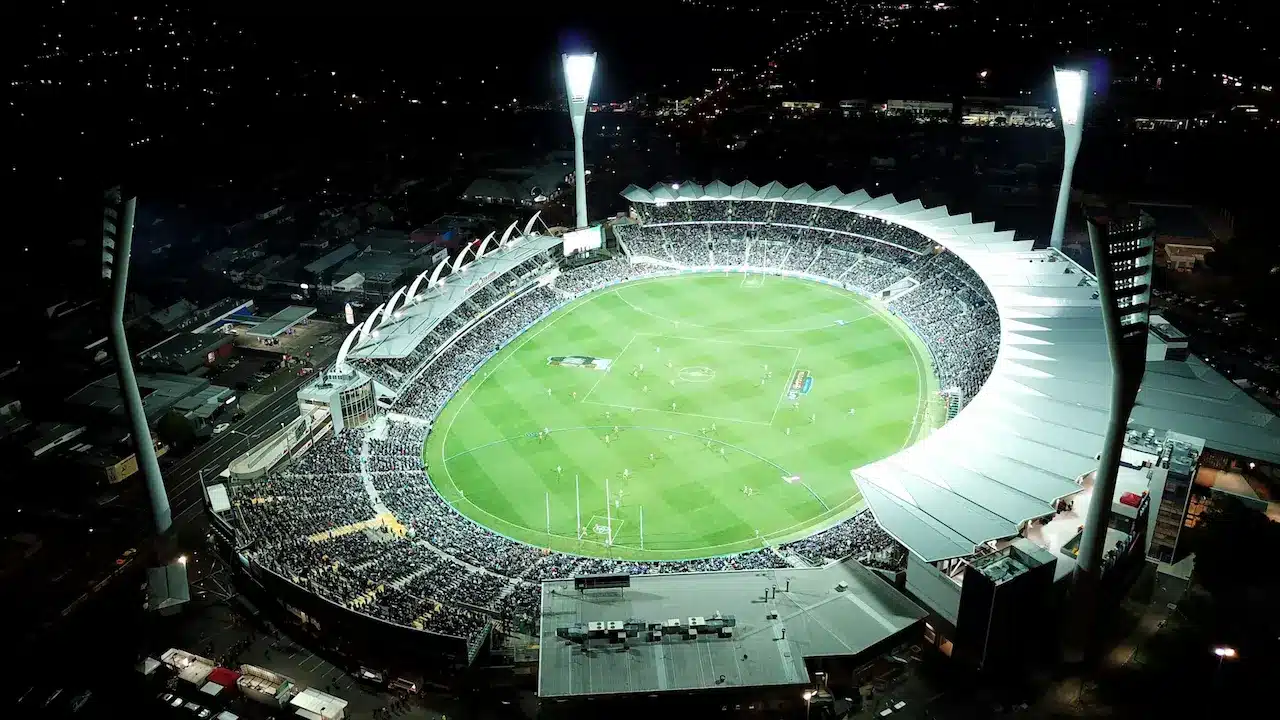
- GMHBA Stadium (Geelong) — Kardinia Park to anyone over 30. Fortress for the Cats. The wind comes off Corio Bay, and the away team usually goes home in pieces.
- The Gabba (Brisbane) — Cricket-shaped, footy-friendly, and the venue that hosted the 2020 COVID Grand Final. Brisbane Lions’ den.
- Heritage Bank Stadium (Carrara) — Gold Coast Suns’ home. A boutique venue on the strip, finally giving the Suns a real home advantage some weeks.
- ENGIE Stadium (Sydney Olympic Park) — Showground turned AFL fortress for the GIANTS. Cricket-free, and the surface holds up beautifully.
- SCG (Sydney) — The Swans’ beloved old paddock. Grass that’s seen Bradman, Bloods and a thousand bombs from Buddy.
- TIO Stadium (Marrara, Darwin) — The NT’s footy hub, where Melbourne and Gold Coast take “home” games when the temperature hits 35°C with 80% humidity.
- Cazaly’s Stadium (Cairns) — Tropical footy with a stand named after Roy Cazaly himself. Gold Coast plays a couple of games a year up here.
- Norwood Oval (Adelaide) — Heritage Adelaide ground occasionally used for AFL pre-season and Showdown undercards.
- Manuka Oval (Canberra) — GWS plays a handful of home games here every season. Beautiful in autumn, brutal in winter.
- Mars Stadium (Ballarat) — The Western Bulldogs’ regional outpost. Country crowds, big atmosphere.
- Blundstone Arena (Hobart) — Hawthorn’s Tasmanian home for years, soon to be displaced by the Hobart waterfront stadium when (if) the Tassie Devils’ deal lands.
- UTAS Stadium (Launceston) — Hawks’ other Tassie ground, currently the best country footy environment in the league. Will become the Devils’ second home once they enter the comp.
- Riverway Stadium (Townsville) — North Queensland’s AFL hub. Gold Coast occasionally plays “home” games here when the schedule gets creative.
The Ghosts: Suburban Grounds The AFL Left Behind
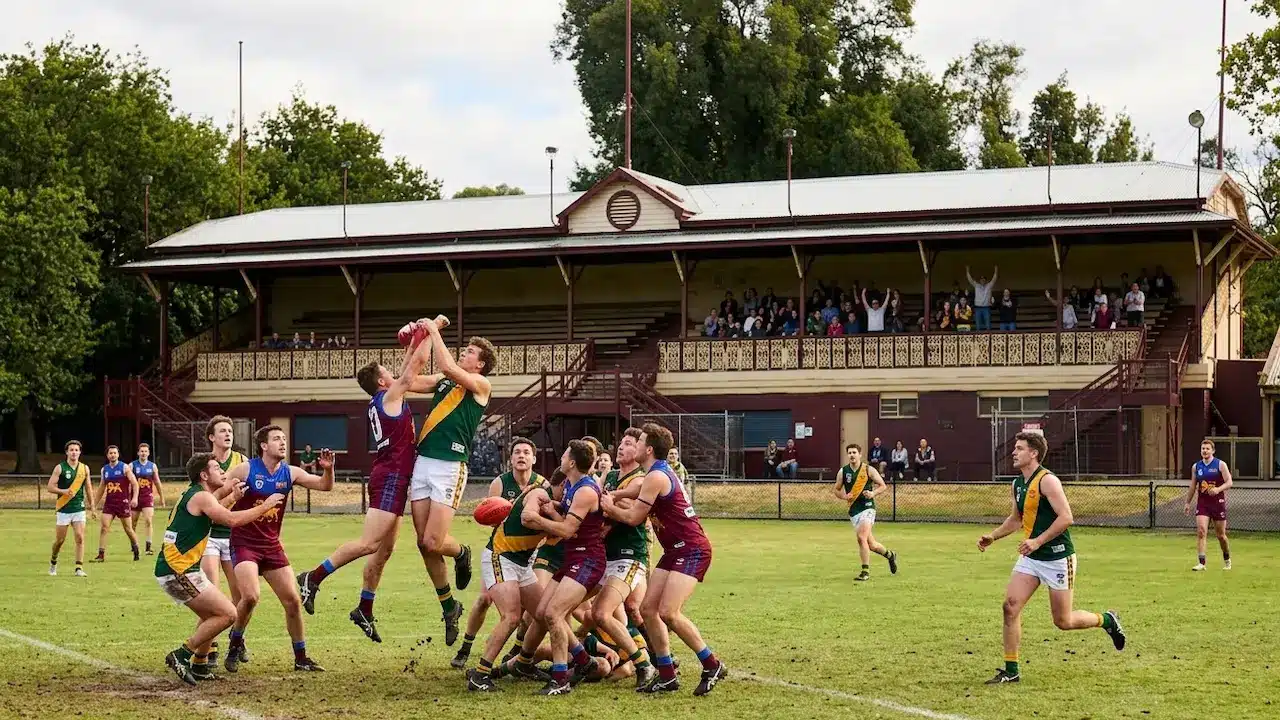
Now we get sentimental. The VFL/AFL used to play across a constellation of inner-Melbourne grounds, each with its own quirks and a list of finals that never made the modern broadcast deal.
- Waverley Park (1970–1999) — Concrete monolith out at Mulgrave. Wind that tore your jumper off. Closed in 1999 because the VFL wanted finals at the MCG and Etihad. Now mostly a housing estate with one preserved grandstand.
- Princes Park (Carlton) — Carlton’s spiritual home, hosted AFL games until 2005. The wind in the third quarter is a club legend.
- Football Park (West Lakes, SA) — AAMI Stadium’s earlier name. Crows and Power’s home from 1991 until Adelaide Oval reopened in 2014. Demolished in 2019.
- Subiaco Oval (Perth) — West Coast and Fremantle’s home for decades until Optus Stadium opened. Now flattened and being redeveloped.
- Lake Oval (South Melbourne) — South Melbourne’s home until they left for Sydney in 1982. Still standing in Albert Park.
- Junction Oval (St Kilda) — Saints’ ground until 1964. Now a cricket facility, but you can still hear the ghosts on a still winter night.
- Brunswick Street Oval (Fitzroy) — Fitzroy’s heartland until 1966. Tiny, tilted and impossible to defend.
- East Melbourne Cricket Ground — Essendon’s first home (1882–1921). Now part of the Jolimont rail yards.
- Punt Road Oval (Richmond) — Tigers’ home until 1965. Still a Richmond training base.
- Glenferrie Oval (Hawthorn) — Hawks’ home until 1973. Still standing, still beautiful, still impossibly small for modern footy.
- Windy Hill (Essendon) — Bombers’ home from 1922 to 1991. The grandstands are heritage-listed.
- Western Oval / Whitten Oval (Footscray) — Bulldogs’ home until 1997. Still, their training base is proudly working-class.
- Moorabbin Oval (St Kilda) — Saints’ home from 1965 to 1992.
- Carrara (original) — The Gold Coast’s first AFL ground in the Brisbane Bears era, since rebuilt as Heritage Bank Stadium.
- Coburg, Toorak Park, Yarraville Oval, Corio Oval (Geelong’s first home), fringe VFL/VFA-era grounds that hosted the odd big game.
The Future: Where AFL Stadium Politics Is Heading
Now for the rumours, because it wouldn’t be a footy article without them.
Tasmania is getting a team, the AFL has confirmed it. The deal hinges on a new 23,000-seat roofed stadium at Macquarie Point in Hobart. Cost overruns, political bunfights and a state that can’t decide whether it wants the team or the stadium more have made this the most-watched construction project in Australian sport. If it lands on time, the Tassie Devils enter the comp in 2028.
The MCG just inked an extension keeping the Grand Final at Jolimont until 2057. NSW politicians have lobbied for years to get a Sydney Grand Final. The MCC’s response: not while the cathedral stands.
Marvel Stadium got a $225m AFL-funded refurb completed in 2023. Wider concourses, better food, and (crucially) the lid that still drives traditionalists mad and bottom-six fans glad.
The Showgrounds (GIANTS) is rumoured to be in line for a roof and an extra tier as Sydney’s western suburbs grow. The AFL wants 35,000+ seats and a permanent finals venue.
Want a deep dive on any one ground, its dimensions, its biggest games, its weirdest moments? Click into any stadium below, and we’ll take you through the lot. From the Brunton Avenue bricks to the dust at Cairns, this is footy’s geography. Pour a stubby and start scrolling.
Every AFL stadium — full guides
- Adelaide Oval — South Australia’s Footy Showpiece
- Blundstone Arena (Bellerive Oval, Hobart) — Tasmania’s AFL Home
- Brunswick Street Oval — Fitzroy’s Lost Lions’ Den
- Cazaly’s Stadium (Cairns) — Far North Queensland’s AFL Home
- Corio Oval — Geelong’s Lost Waterfront First Home
- East Melbourne Cricket Ground — The Bombers’ Demolished First Home
- ENGIE Stadium (Sydney Showground) — The Giants’ Western Sydney Fortress
- Football Park (AAMI Stadium) — Adelaide’s Lost Concrete Bowl
- Glenferrie Oval — Hawthorn’s Heritage Heartland
- GMHBA Stadium (Kardinia Park) — The Cats’ Fortress
- Heritage Bank Stadium (Carrara) — The Suns’ Gold Coast Home
- Junction Oval — St Kilda’s Pre-Premiership Heartland
- Lake Oval (South Melbourne Cricket Ground) — South Melbourne’s Lost Home
- Manuka Oval (Canberra) — The Capital’s Heritage Footy Ground
- Mars Stadium (Ballarat) — The Bulldogs’ Country Outpost
- Marvel Stadium — The AFL’s Roof-On Workhorse
- Moorabbin Oval — St Kilda’s 1966 Premiership Home
- Norwood Oval (Adelaide) — SANFL’s Heritage Heart
- Optus Stadium (Perth) — The West’s Crown Jewel
- Princes Park (Optus Oval) — Carlton’s Spiritual Home
- Punt Road Oval — Richmond’s Heritage Tigers’ Den
- Riverway Stadium (Townsville) — North Queensland’s AFL Outpost
- Subiaco Oval — Perth’s Demolished AFL Cathedral
- The Gabba (Brisbane) — Queensland’s AFL Stronghold
- The MCG (Melbourne Cricket Ground) — Footy’s Cathedral
- The Sydney Cricket Ground (SCG) — The Swans’ Heritage Home
- TIO Stadium (Marrara, Darwin) — The AFL’s Tropical Frontier
- UTAS Stadium (York Park, Launceston) — Country Tasmania’s Footy Fortress
- Waverley Park (VFL Park) — The AFL’s Lost Suburban Cathedral
- Whitten Oval (Western Oval) — Footscray’s Working-Class Soul
- Windy Hill — Essendon’s 70-Year Bombers Fortress